


Have you ever encountered a situation where you can access the internet normally, but accessing a website is prohibited? Registering a website account but getting banned? That’s all because of IP issues! Your IP address reveals a lot of information about you, including your location and Internet activities.

In this article, we will learn together about IP addresses, how websites can use them to track you, and how IP proxies can help you better advance your business.
What is an IP address?
IP address is the abbreviation of Internet Protocol address, which is a digital label assigned to each device connected to the computer network using Internet protocol for communication.
There are two types of IP addresses: IPv4 and IPv6.
IPv4 addresses consist of four digits separated by dots, with each digit ranging from 0 to 255, resulting in a total of approximately 4.3 billion unique IP addresses. However, with the explosive growth of the Internet, IPv4 addresses have become increasingly rare.
The IPv6 address is composed of eight groups of four hexadecimal digits separated by colons, so there can be about 340 billion unique IP addresses, which should be enough to cope with the rapid growth of the Internet in the future.
Devices use IP addresses to communicate with each other on the Internet, while TCP/IP and HTTP protocols also use IP addresses to transmit data packets between devices. If a device wants to access the Internet, it must have a unique IP address.
How does the website identify your IP?
The website can identify your IP address in several ways. When you connect to the Internet, an Internet service provider (ISP) will assign you an IP address to identify your device and its location on the Internet.
When you go to the website, your device will send a message to the website’s computer, which includes your IP address. The website can get your location and other details about your equipment and the Internet through this address.
Websites can also track your behavior on the website by using tools like cookies, or by using browser fingerprints to collect information about your device and create a unique identifier for tracking you.
How to ensure IP security and prevent being blacklisted?
Implementing DNS leak protection: Ensure that your DNS requests are not leaked by implementing DNS leak protection.
Disable WebRTC: WebRTC may leak IP addresses, so make sure your website disables it by default.
Use Tor: Use the Tor network to anonymize Internet traffic.
Using a fingerprint browser: Create a virtual secure environment using a fingerprint browser and configure IP proxies, set cookies, and other tools for each environment to prevent IP leakage.
Use IP proxy
What is the use of IP proxy?
Proxy IP is a network proxy service used to hide the real IP address. It allows users to access network resources through an intermediate server when accessing the Internet, thereby hiding their real IP address. For example, IPNut Pure Proxy provides dynamic and static IP proxies that are high-quality, pure, and exclusive, helping users upgrade their business.
Usually, proxy IP can have the following functions:
1. Privacy and security: Hide users’ real IP addresses, protect their privacy, and prevent personal information from being leaked;
2. Preventing viruses: providing a certain degree of security protection to prevent users’ computers from being hacked or infected with malicious software such as viruses;
3. Avoid restrictions: You can bypass geographical location restrictions, blacklists, and access blocked websites and social platform services;
4. Data collection: Utilize applications such as data collection and web crawlers to efficiently collect and analyze network data;
5. Marketing Promotion: Used for online marketing and promotional activities, helping users advertise and promote in different regions.
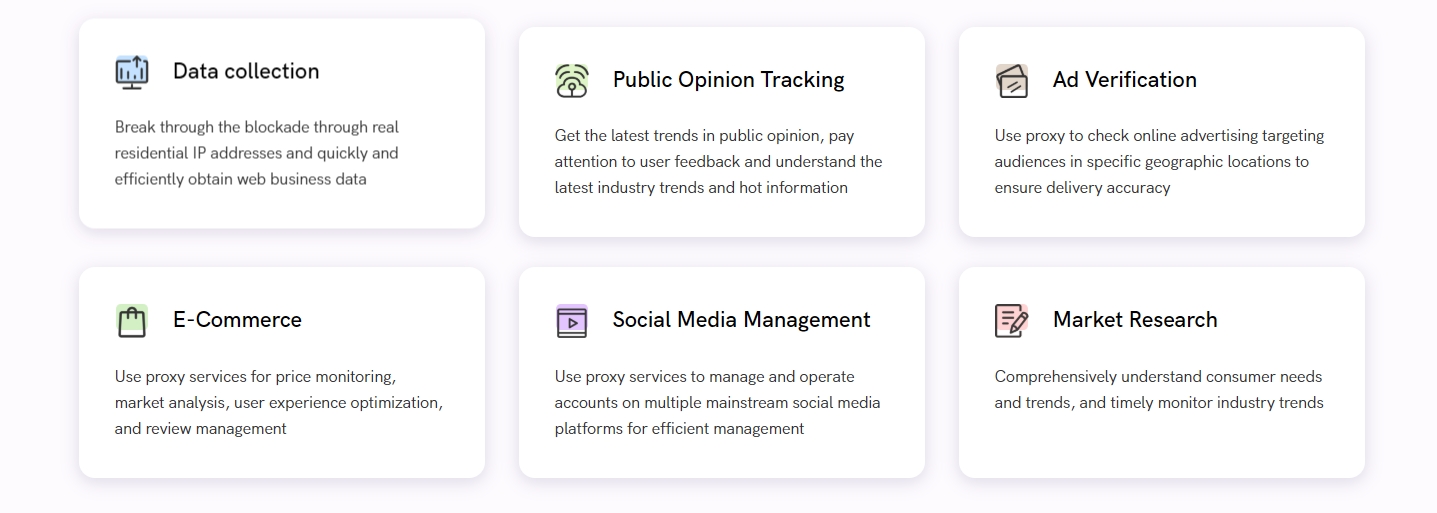
The main method of using IP proxies in cross-border e-commerce is to use them in conjunction with fingerprint browsers. IPNut can easily integrate with all mainstream fingerprint browsers on the market, facilitating the smooth progress of cross-border business.