



“How do I nurture a new Instagram account?” (often shortened to “IG”) is a common question in matrix operations. Let’s be clear first: whether an account runs stably depends on content, behavior, environment, and more — the network environment is only one piece. This article covers only the network layer: from registration to stable operation, which IP to use at each stage and how to maintain the environment, so you generate fewer “environmental contradiction” signals. The discussion covers the role of IP in the network environment only; it does not describe platform-specific risk-control rules.
1. Which IP Signals Instagram Risk Control Watches
The IP-related network signals mainly fall into these groups:
- Exit IP type: the identification gap between datacenter/hosting networks and real user networks
- Login location consistency: how well the account’s habitual region matches the current login region
- Multiple accounts sharing one network: several accounts behind the same exit IP
- Environment leaks: DNS/WebRTC leaks exposing your real network information
Understanding these signals is the premise for designing a stage-based IP strategy.
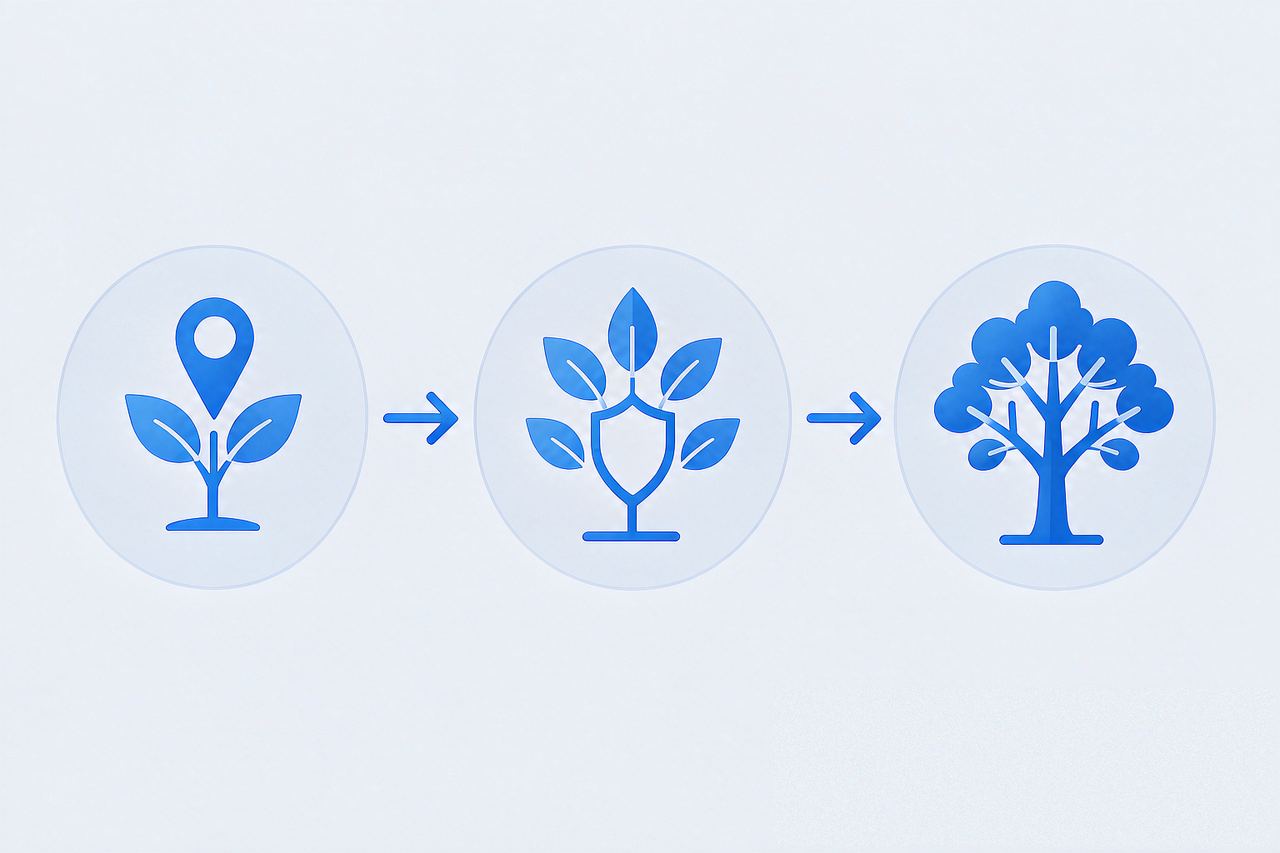
2. The Three-Stage IP Strategy at a Glance
| Stage | Duration (experience-based) | Network strategy | Focus |
|---|---|---|---|
| Registration | Day of signup | Target-market region IP, residential/ISP type | A clean “birthplace” environment |
| Growth | Weeks 1-4 after signup | Same IP fixed long-term; no environment changes | Stability > switching; avoid frequent jumps |
| Operation | After stabilization | Keep the fixed IP; plan new account groups when expanding | Clear, manageable account-IP mapping |
Note: durations are general experience-based references, not promises — each account’s actual pace depends on content and platform assessment.
3. Registration Stage: Get the “Birthplace” Right
The network environment at the moment of registration forms the account’s earliest environment record. Key points:
- Region matches the target market: US/EU traffic means US/EU region IPs, consistent with your future content positioning
- Type: residential/ISP: keep the exit type as close to a real user network as possible (static residential ISP carries exactly this flag)
- One environment per registration: don’t batch-register multiple accounts in the same environment; avoid overlapping registration signals
4. Growth Stage: Environment Stability Above All
The first weeks after registration set the environment’s shape. The core strategy is one word: stable.
- Keep the same exit IP; no pointless switching
- Keep the environment’s timezone, language, and keyboard layout aligned with the IP region (for layer-by-layer consistency, see how fingerprint browsers and proxy IPs divide the work)
- Check periodically: IP type, region, and leak status — all three clean
The most common mistake at this stage: “I heard switching IPs is good for the account” — frequent jumps are precisely a more visible abnormal signal.
5. Operation Stage: Keep Account-IP Mapping Clear and Manageable
Once stable:
- Each account maps to a clearly dedicated IP (or a clearly defined shared account group); keep the mapping documented within the team
- When adding accounts, plan new environments and IPs; don’t mix with existing accounts
- Before any environment change (e.g., switching IP), evaluate first: is the new IP’s region and type compatible with the account’s history
6. FAQ
Q: Dynamic or static IPs for new Instagram accounts?
A: The growth stage favors stability: static IPs (fixed exit) support environmental consistency; dynamic IPs change exits frequently, contradicting the goal of a stable environment. Choose by your strategy — cheaper isn’t better.
Q: Does IG multi-accounting require one IP per account?
A: Depends on your isolation needs. For thorough isolation, one account one IP; for grouped accounts sharing a network, define the strategy clearly and control the count. Ambiguous “sharing” is where risk accumulates fastest.
Q: What if I picked the wrong IP region at registration?
A: During growth, keep the current environment stable rather than making drastic changes immediately. Long-term, what matters is that content positioning and network region align — stability and consistency beat a “perfect start.”
7. Summary
Instagram’s network environment strategy in three lines: registration — pick the right birthplace; growth — stay stable; operation — keep account-IP mapping clear. The network layer is only one part of account operations, but making it solid reduces a class of environmental contradiction signals.
IPNut‘s Static Residential ISP provides fixed exit IPs with residential/ISP type flags, purchasable by target-market region — a fitting foundation for a stage-based Instagram account environment. For batch data tasks, a Static Datacenter IP is an option. For protocol selection, see the SOCKS5 vs HTTP proxy guide.