


Many people have experienced this: logging into a platform with a datacenter IP quickly triggers verification or restriction, while a residential IP doesn’t. Why can platforms “tell”? This article explains from an ASN (Autonomous System Number) perspective: how platforms judge an IP’s network type, what role ASN plays, and what it means for you. It covers public network information and identification mechanics only, and does not describe any platform’s specific risk-control rules.
1. First, Understand: How Platforms Judge an IP’s Network Type
Platforms can use public network ownership info and third-party IP databases to judge a visitor IP’s network type. Common data sources include:
- ASN / BGP network ownership: the network operator entity an IP range belongs to
- AS name / Organization: who operates it (telecom, cloud vendor, etc.)
- IP range registration info: allocation and registration records
- Third-party IP type databases: databases labeling Hosting / Data Center / ISP, etc.
- Geolocation and network-attribute databases: region, network attributes, etc.
Most of this info is public and queryable by any service — but note: ASN itself is not a unified classification standard for Residential / Hosting / Data Center. Labels like “Hosting / Data Center / ISP / Business” often come from third-party database classifications, not a standard field defined by the RIR for all IPs. Different databases’ classification standards can differ, so the same IP showing different network-type labels in different detection tools is not rare.
2. Why Datacenter IPs Are “Fairly Distinctive”
Datacenter/cloud vendor IPs typically have these features:
- Relatively clear ASN ownership: if an IP range clearly belongs to cloud/datacenter networks like AWS or Hivelocity, its ownership is usually fairly easy for third-party databases to identify
- Network type labels: some third-party databases mark Hosting / Data Center
- Concentrated usage patterns: many requests from a few IP ranges, automation-heavy
By contrast, home broadband usually belongs to local telecom, broadband, or mobile operators, and its IP may be marked as ISP, Residential, Business, or other types in different databases — note that “ISP” and “Residential” are not the same thing; an IP belonging to an ISP network doesn’t mean it will necessarily be labeled residential.
3. Why You Can’t Judge IP Type by ASN Alone
ASN helps you identify the network organization an IP belongs to, but it can’t alone determine whether the IP is residential, business, or datacenter. Two reasons:
- One operator can run multiple network types: home broadband, enterprise networks, mobile networks, etc., can all sit under the same ASN
- Different databases may label differently: the same IP can be typed differently across databases
Therefore, judging IP type should combine ASN, Organization, IP type labels, and multiple databases — no single dimension decides it.
4. How Identification Happens (Mechanism View)
A possible identification flow:
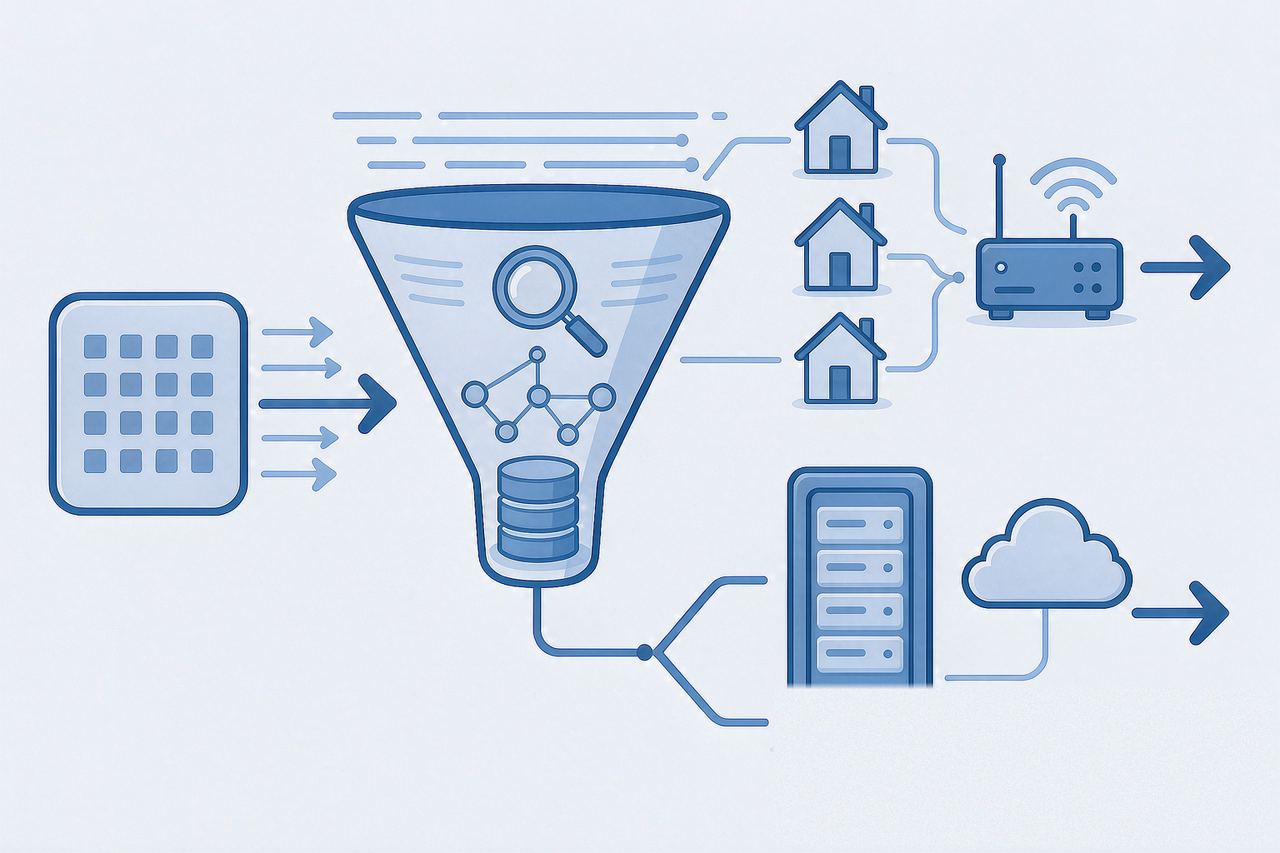
Your request arrives → platform queries the IP's network ownership info → judges network type
→ compares with account history → evaluates together with other signals
Key insight: identifying a “datacenter IP” doesn’t mean “something will definitely happen” — IP type is just one signal a platform may observe; the actual assessment may also involve device, behavior, account history, and other factors. We don’t know or speculate about any platform’s specific internal rules.
5. So Can Datacenter IPs Still Be Used?
Yes, depending on the scenario:
| Scenario | Is a datacenter IP suitable? |
|---|---|
| Data scraping | ✅ In cases where the target site permits access, request frequency is reasonable, and terms of service are respected, datacenter IPs usually meet the need |
| Batch verification/testing | ✅ Usable (with reasonable frequency) |
| Account operations (social/e-commerce) | ⚠️ Evaluate network-consistency requirements |
| Ad verification | ⚠️ Depends on the platform |
Core principle: it’s not “datacenter IPs can’t be used” — it’s matching the IP to your business scenario. For scenarios needing “like an end-user network,” residential/ISP IPs fit better; for data tasks, datacenter IPs are efficient and sufficient.
6. FAQ
Q: Do platforms have a “datacenter IP blacklist”?
A: There’s no single public, universal “datacenter IP blacklist” shared by all platforms. Platforms may combine ASN, IP registration info, third-party network-type databases, and their own accumulated data to judge an IP’s network type — there’s no simple “list” mechanism.
Q: Does using a datacenter IP always lead to restriction?
A: Not necessarily. Network type is just one signal a platform may evaluate; platforms assess device, behavior, account history, and more comprehensively. “Using a datacenter IP” alone doesn’t necessarily produce any outcome.
Q: If my business doesn’t suit datacenter IPs, what should I choose?
A: If your business has requirements for end-user network attributes, choose residential/ISP-type exits (like a Static Residential ISP); if you mainly do data scraping, API calls, or other tasks with low residential-attribute requirements, datacenter IPs usually offer cost and stability advantages.
7. Summary
ASN is important information for judging an IP’s network ownership, but it’s not the only standard for judging IP type — labels like Hosting/Data Center/ISP/Business usually come from specific databases’ classifications, databases can differ, and platforms may combine multiple network and business signals. Choosing datacenter or residential ISP should be based on business needs, not a simple judgment of which is “better.”
To self-check network types, see Native IP vs Datacenter IP. For account-operation environment ideas, see the Facebook “Suspicious Activity” IP Checklist. IPNut‘s Static Residential ISP and Static Datacenter IPs cover both scenarios — choose as needed.