


LinkedIn is a key B2B acquisition channel, but teams often disagree on “how many accounts and how to operate”: some favor bulk (multiple accounts reaching clients in parallel), others favor quality (a few core accounts building content and relationships). This article covers account strategy + network-environment management: what each route needs for accounts and networks, common mistakes, and how to choose. Follow LinkedIn’s terms of use; no platform risk details or outcome promises here.
1. Two Routes: Bulk vs Quality
Bulk operations (scaled outreach):
- Features: multiple sales accounts reaching clients in parallel, divided by industry, client segment, or region
- Network needs: many accounts → network environments need clear mappings; plan independent exits or reasonable grouping by business lines per account count and relationships
- Fits: standardized outreach flows, multi-industry/multi-region expansion
Quality operations (trust-driven):
- Features: a few core accounts focused on content (articles, posts), relationships, and personal professional brand
- Network needs: few accounts → network exits and browser environments stay stable long-term
- Fits: brand-style profiles, high-ticket consulting, deep industry relationships
The difference between the two routes: quality LinkedIn operations emphasize personal professional identity, content quality, and relationships; bulk operations emphasize team division of labor and process standardization.
Important: independent IPs are a network-environment management approach, not a LinkedIn mandate — there’s no “one LinkedIn account must have one IP” rule.
2. Account and Network Planning for Each Route
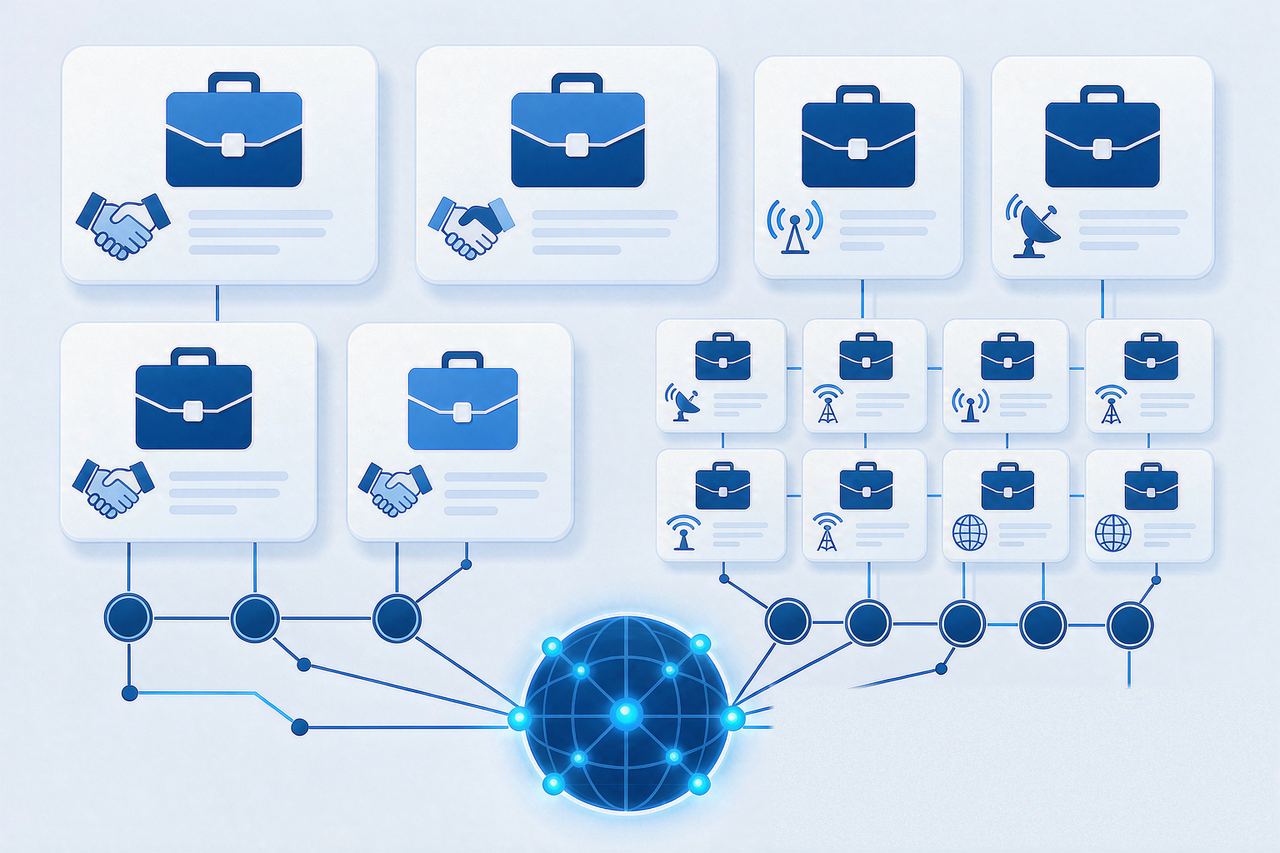
Account planning:
- Keep account positioning, business ownership, and assigned personnel clear
- Network planning should serve team collaboration, not simply chase account count
- Quality accounts are maintained long-term with stable positioning and content direction
Network environment:
- Bulk: with parallel accounts, plan independent exits or reasonable grouping per account count and business relationships (it doesn’t have to be “all independent” to be sound)
- Quality: for core accounts used long-term, keeping network exits and browser environments stable supports sustained, traceable environment management — a management recommendation, not a claim that fixed IPs raise account security or circumvent review
Browser environment:
- If the business genuinely needs multiple independent browser environments, use browser tools that support multi-environment management; capabilities depend on the tool’s actual features (multi-account network thinking in the multi-account IP isolation plan — principles are universal; setup in the AdsPower tutorial)
3. Records and Handovers: Account → Environment → IP → Person
Whichever route, team operations should keep records of: account / browser environment / exit IP / purpose / person. The core relationship:
Account → Browser environment → IP → PersonAdding accounts, handing over, or troubleshooting traces the environment and network exit quickly (team standards in the team multi-account IP plan).
4. Common Mistakes
- Mistake 1: more accounts is always better — account positioning and operational quality matter equally; if account/network planning can’t keep up, scale adds chaos
- Mistake 2: accounts over content — LinkedIn is a content + relationships platform; account environments are the foundation, content and engagement are the value
- Mistake 3: switching exits casually — frequent exit changes make environment management messy; stability mainly reduces team-management confusion, not a “workaround”
5. FAQ
Q: What IP for LinkedIn bulk outreach?
A: If a team runs multiple accounts in parallel for normal business, plan stable network environments by account ownership and personnel, with clear account-browser-environment-exit-IP mappings. Actual operating frequency should follow LinkedIn’s terms of use and the account’s own business needs — don’t follow “safe counts” claims; go by platform rules and business cadence.
Q: Does quality operation need a fixed IP?
A: Fixed exits support long-term stable management and are a common network-environment recommendation — but not a LinkedIn mandate, and no outcome guarantees.
Q: Can I run both routes?
A: Yes — “quality mains + bulk auxiliaries” is a common organizational style. This doesn’t mean all accounts must use different IPs — plan networks by account importance, business ownership, assigned personnel, and whether independent management is needed.
6. Summary
For LinkedIn, first decide your route — bulk (scaled outreach) or quality (deep trust). The bulk route centers on clear grouping and records of accounts, environments, and IPs; the quality route centers on long-term stability and sustained maintenance. Both routes require following LinkedIn’s terms, valuable content, and sound team collaboration standards.
IP is part of the infrastructure, not the core factor deciding LinkedIn outcomes — account content, relationship building, and team collaboration matter more.
For teams needing long-term fixed network exits, choose Static Datacenter IPs or Static Residential ISP per the actual business scenario (available at IPNut); without special network-source requirements, Static Datacenter IPs usually suffice for fixed exits. Static Datacenter IPs also cover data tasks.