


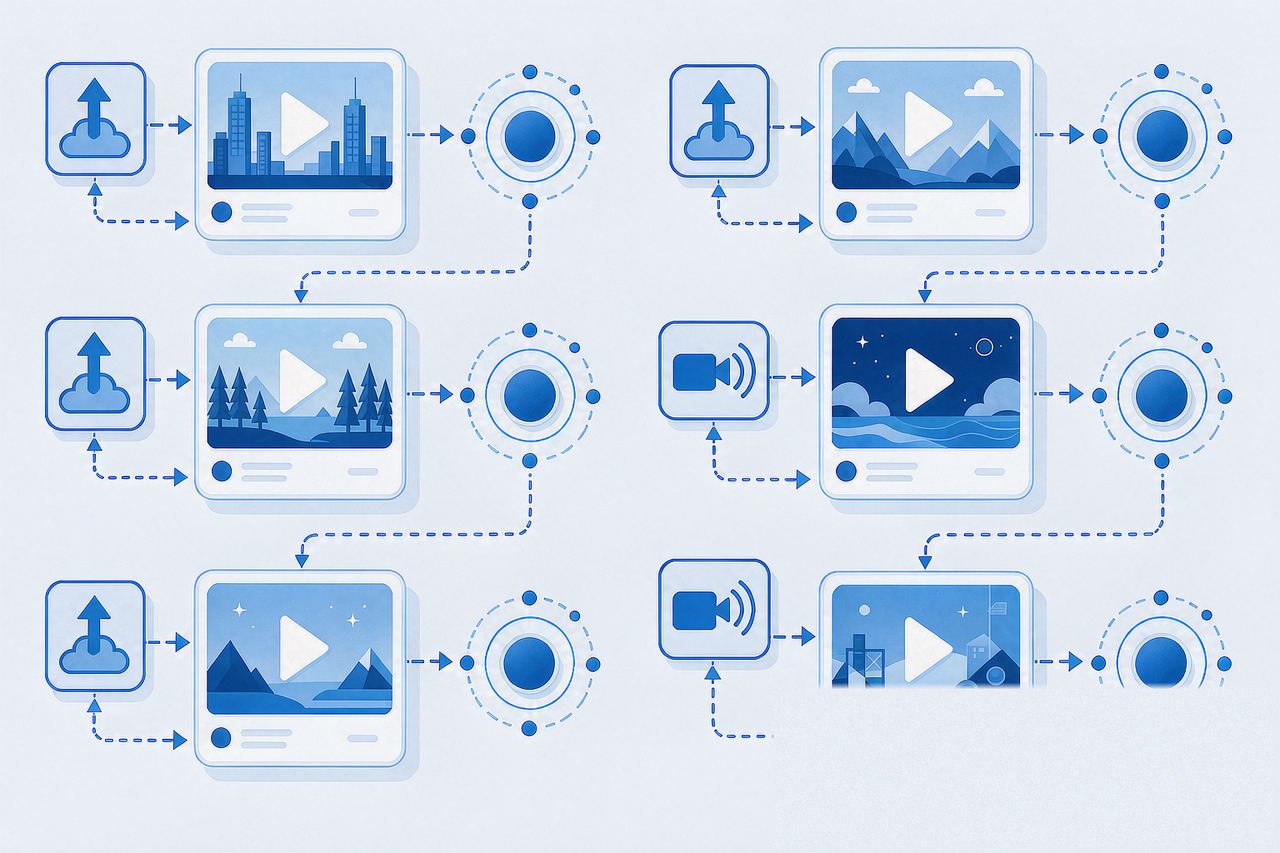
Teams running a YouTube multi-channel matrix (channels in different languages or topics) find network planning directly affects daily operations: uploading videos, checking analytics, and live streaming all need stable, suitable networks. This article covers network-environment and fixed-IP planning for multi-channel YouTube operations: when independent IPs are needed, how to choose fixed IPs, and what to watch for in uploads/live streaming. It covers network-layer methods only — no platform review rules or channel-performance promises. Follow YouTube’s policies.
1. The Relationship Between Google Accounts and YouTube Channels
YouTube channels sit under Google accounts, but channels, Google accounts, and network environments should be planned per the actual business organization — no need to mechanically follow “one channel, one account, one IP.”
- One Google account can manage multiple channels under YouTube’s actual channel system (different brands or multi-language content can sit in a sensibly organized account structure)
- Whether to give channels/accounts independent exits depends on business organization, team collaboration, and network-management needs
- For the network part of managing multiple Google accounts, see the Google/Gmail multi-account guide
Note: the network environment is management infrastructure, not “safer channels or more traffic” — channel performance depends on content and operations.
2. When Do You Need Independent IPs (Decision Table)
Group channels and allocate exits — group by language/topic/business first, then judge by scenario:
| Scenario | Suggestion |
|---|---|
| Same team, same business line, normal collaboration | Can plan the network environment together |
| Different brands or business lines needing separate management | Independent exits suggested |
| Core channels managed long-term with fixed setups | Fixed exits suggested |
| Needs large-scale IP rotation | Static IPs don’t fit — choose dynamic proxies |
Important: independent IPs are a network-environment management approach, not a YouTube mandate — there’s no “one channel must have one IP” rule (for multi-channel/multi-account thinking, see the multi-account IP isolation plan — principles are universal).
3. Uploads and Backend Access
- Long-video uploads rely on stable connections: for large uploads, prioritize actual upload bandwidth, connection stability, latency, and packet loss over IP type — fixed IPs mainly keep network-exit consistency; there’s no such thing as “residential IP = faster uploads”
- Use one environment set for Creator Studio and daily operations to avoid splits
4. Live-Stream Network
Live stability depends on upload bandwidth, latency, packet loss, and the push-stream link. If live streaming drops, stutters, or push-stream interrupts, prioritize checking upload bandwidth, packet loss, and line quality — don’t first change the IP. Fixed IPs can’t replace sufficient live bandwidth and a stable line.
5. Choosing Fixed IPs for YouTube Scenarios
If you need a fixed exit, how to choose between the two static products:
Static Datacenter IP
- Fits: no special residential/ISP network-attribute requirements; needs a long-term fixed exit; values cost and fixedness
Static Residential ISP
- Fits: requirements for ISP/residential network-source attributes; business more sensitive to network-source attributes; also needs a long-term fixed exit
Core difference: both are static fixed exits — stability is not the core difference; the main difference is network-source attributes and cost. There’s no such thing as “residential IP is always more stable”; without special source-attribute requirements, Static Datacenter IPs usually have a cost edge.
6. FAQ
Q: Managing multiple YouTube channels with one Google account — do I need multiple IPs?
A: Not necessarily. Whether independent exits are needed depends on the actual business organization. When multiple channels are managed normally by one team, plan the network together; consider independent exits only if different brands or business lines need separate management.
Q: Can multiple YouTube channels use the same IP?
A: Yes — independence depends on business relationships and management style, not a platform mandate.
Q: Is Static Datacenter IP or Static Residential ISP better for YouTube channels?
A: Both provide fixed exits. Without special network-source-attribute requirements, Static Datacenter IPs usually have a cost edge; consider Static Residential ISP if the business is more sensitive to ISP/residential network sources.
Q: Video uploads dropping — is it an IP problem?
A: Prioritize checking bandwidth, line quality, and packet loss rather than attributing it to IP directly — fixed IPs mainly keep exit consistency; they can’t replace bandwidth.
Q: A channel asks for verification — IP-related?
A: Not necessarily. Verification has many triggers; check the platform prompt first, then investigate network, environment, and account status item by item — don’t simply attribute verification to IP.
7. Summary
Network planning for multi-channel YouTube operations: group channels → judge whether independent IPs are needed by scenario → keep upload/backend environments consistent → focus live streaming on push quality. Whether multi-channel operations need independent IPs depends on business relationships, team management style, and network-independence needs. Long-term fixed exits can use Static Datacenter IP or Static Residential ISP; for large-scale IP rotation, choose dynamic proxies rather than static IPs.
Channel content and compliant operations are the root — follow YouTube policies and do your controllable infrastructure well (team record standards in the team multi-account IP plan).
For long-term fixed network exits, choose Static Datacenter IPs or Static Residential ISP per the actual business scenario (available at IPNut); without special network-source requirements, Static Datacenter IPs usually suffice.